
The Hong Kong Toys & Games Fair isn't a four-day event. It's a six-month project that starts the moment last year's booth lights go dark. Factories that fill their order books arrive in January with prototypes that didn't exist in August, compliance paperwork scanned and ready to E-posta, and a list of 20 pre-qualified buyers who already saw a teaser PDF two months earlier. This the full preparation cycle—new product development timelines, compliance documentation, pre-show buyer outreach—so your factory walks into the Hong Kong Convention and Exhibition Centre on January 11, 2027 with a plan, not just a booth.
The 2027 Hong Kong Toys & Games Fair runs January 11–14 at the Hong Kong Convention and Exhibition Centre, 1 Expo Drive, Wan Chai. Organized by the HKTDC, it spans 55,580 square meters and drew over 2,000 exhibitors and 28,000 buyers in prior editions. Co-located with the Hong Kong Stationery Fair and Hong Kong Baby ürün Fair, it covers smart-tech collectibles, AI/AR interactive toys, STEAM kits, licensed IP merchandise, traditional plush and wooden toys, and outdoor ride-ons. For OEM/ODM factories, the question isn't whether to exhibit—it's whether you'll be ready when the doors open.
What Role Does a Trade Show Play in a Sourcing Strategy?
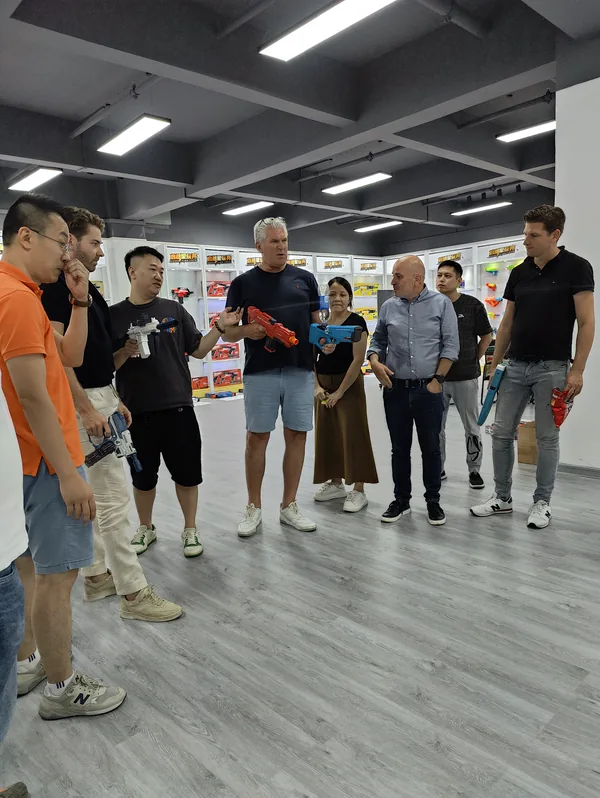
The Hong Kong Toys & Games Fair is a B2B relationship incubator, not a wholesale market where you sell inventory off the shelf. Buyers attend to evaluate manufacturing capability, touch product samples, negotiate OEM/ODM terms face-to-face, and build trust that no Alibaba listing can replicate.
A trade show serves a different function than a distributor relationship. Distributors hold inventory, manage regional logistics, and sell to retailers on your behalf. The Hong Kong fair is where you meet the importers, brand owners, and retail chains who either contract your factory directly or feed into those distribution networks. One Latin American buyer at a prior edition said she attends specifically to find factories that can turn TikTok trends into physical ürün within a single season—something no catalog alone can prove. She needs to see the factory's speed, material samples, and packaging capabilities in person. That's the value a well-prepared booth delivers.
How Should a Factory Prepare? The 6-Month Timeline
Work backward from January 11, 2027. The factory that wins orders in January started development in July. Here's the milestone calendar.
| July–August 2026: New Product Development | Review the fair's Kategori focus areas: smart-tech collectibles, AI/AR interactive toys, STEAM kits, licensed IP accessories, traditional plush and inflatables, and outdoor ride-ons. Develop genuinely new mechanisms, curriculum tie-ins, or fabric designs—not last year's solar robot kit with a new color shell. Prototypes should be in hand by mid-September. |
|---|---|
| September–October 2026: Compliance Documentation | Commission third-party lab testing now. For the US market, ASTM F963-23 and CPSIA tracking labels are baseline. For the EU, EN71 Parts 1–3 plus REACH compliance. Organize everything into a single PDF packet: test reports, factory audit Sertifikalar (BSCI, ISO 9001, SEDEX if held), and a one-page factory profile with MOQ ranges, lead time bands, and port of export. This packet gets emailed to buyers within 24 hours of a booth meeting. |
| November 2026: Booth Design and Sample Logistics | Design your display around the three Ürün kategorileri you're leading with. Ride-ons need floor space for buyers to test stability. Plush needs a tactile display wall. Ship samples to Hong Kong by late December—factor in customs clearance for battery-containing items. Draft your show-floor pricing matrix: unit costs at MOQ, at 5,000 units, at 20,000 units. |
| December 2026: Buyer Outreach | Pull your CRM list of past inquiries that didn't convert. E-posta a single-page teaser PDF showing two new ürün, your booth number, and a specific meeting time slot. Target 20–30 pre-scheduled meetings for the four-day fair. Cross-reference buyer lists from prior Canton Fair or New York Toy Fair appearances and send personalized invites referencing the earlier conversation. |
Factory Readiness Self-Audit: What to Check Before the Fair
| Product Samples | At least 3 genuinely new ürün (not color variants of existing SKUs) aligned with fair Kategoriler: STEM, smart-tech, plush, ride-ons, or licensed IP accessories |
|---|---|
| What to check | Are prototypes functional and tested? Can a buyer hold, operate, and inspect internal components? |
| Red flag | Bringing only catalog photos or last year's samples with new packaging—experienced buyers recognize stale product instantly |
| Compliance Documents | EN71 (EU), ASTM F963 (US), CPSIA tracking labels, REACH, plus any factory audit certs (BSCI, ISO 9001, SEDEX) |
| What to check | Are test reports dated within the current certification cycle? Is documentation organized into a single shareable PDF packet? |
| Red flag | Promising to 'get testing done after the order'—no serious importer will proceed without seeing current compliance paperwork |
| Pricing Matrix | FOB unit cost at MOQ, at mid-volume (5,000 units), at high-volume (20,000+ units), plus tooling amortization if applicable |
| What to check | Can you quote three volume tiers from memory? Are tooling costs clearly separated from per-unit costs? |
| Red flag | Hesitating or needing to 'check with the boss' on basic pricing bands—this signals either inexperience or a middleman, not a factory |
| Buyer Outreach | 20–30 pre-scheduled meetings confirmed before January 1, with a teaser PDF sent to each buyer in advance |
| What to check | Is your CRM segmented by buyer region and product interest? Have you referenced prior communication in your invite? |
| Red flag | Relying solely on walk-in traffic—the fair draws 28,000+ buyers; without pre-scheduled meetings, you're competing for attention against 2,000 other exhibitors |
| Booth and Logistics | Display designed for hands-on interaction, samples shipped and customs-cleared by late December, battery documentation prepared for electronic items |
| What to check | Can a buyer physically test your ride-on's steering or touch your plush fabric grades? Are battery safety data sheets ready? |
| Red flag | Samples stuck in customs on day one because battery or material documentation was filed late—this is entirely preventable |
How to Follow Up After the Fair Closes
The fair ends January 14. The real work starts January 15. Buyers visit dozens of booths over four days—your factory gets lost in the noise unless you follow up with precision.
Within 48 hours of the fair closing, send every qualified lead a personalized E-posta that includes: the compliance document packet you prepared in October, the specific product photos you discussed at the booth, your pricing matrix for the volumes they expressed interest in, and a proposed next step (video call, factory visit invitation, or sample shipment). Generic 'nice to meet you' emails get deleted. Specifics get replies.
For buyers who requested custom OEM work—a modified plush design, a branded ride-on, a STEM kit with custom packaging—send a preliminary spec sheet and timeline within one week. One Latin American buyer at a prior edition said she places orders with the factory that moves fastest after the fair, not necessarily the one with the lowest unit Fiyat. Speed signals manufacturing competence.
Segment your post-fair contacts into three tiers. Tier A: buyers who discussed specific ürün and volumes, requested compliance docs, and asked about customization capabilities. These get immediate, detailed follow-up. Tier B: buyers who showed genuine interest but need nurturing—send the compliance packet and a product catalog, and schedule a check-in for 30 days later. Tier C: generic business card drops with no substantive conversation. Add them to your newsletter list and move on.
What Should Buyers Check at Every Booth? (And What Factories Should Anticipate)
If you're a buyer walking the 2027 fair, here's what you should be checking at every booth. If you're a factory, this is exactly what your prospects are silently scoring you on—so prepare accordingly.
Sample quality and novelty: Is the product genuinely new, or a minor variation of something you've seen before? Hold it. Operate it. Check for sharp edges, loose stitching on plush, battery compartment accessibility on smart toys. A prototype that feels flimsy in your hand won't magically improve in production.
Compliance documentation on demand: Ask for EN71 or ASTM F963 test reports. A factory that can't produce them within minutes—printed or on a tablet—is either unprepared or hasn't actually tested their ürün. Both are dealbreakers.
Communication clarity: Does the booth representative understand your market's requirements? Can they discuss FOB terms, lead time estimates, and MOQ flexibility without deferring to someone absent? The person staffing the booth should be empowered to have a substantive commercial conversation.
Factory transparency: Ask for the factory address, recent audit reports, and photos of the production floor. Factories proud of their operations share this readily. Those that deflect or make excuses are often trading companies posing as manufacturers.
Post-fair responsiveness: After you leave the booth, note how long it takes to receive follow-up materials. The factory that emails compliance docs and pricing within 24 hours demonstrates the operational discipline you want in a long-term OEM partner.
FAQ
When is the 2027 Hong Kong Toys & Games Fair?
January 11–14, 2027, at the Hong Kong Convention and Exhibition Centre, 1 Expo Drive, Wan Chai. The Hong Kong Stationery Fair and Hong Kong Baby ürün Fair run concurrently at the same venue.
What Ürün kategorileri should OEM factories focus on?
Smart-tech collectibles, AI/AR interactive toys, STEAM educational kits, licensed IP merchandise, traditional plush and wooden toys, and outdoor ride-ons. Align new product development with these Kategoriler to match buyer demand.
How far in advance should a factory start preparing?
Start new product development in July 2026 (6 months out). Commission compliance testing by September. Ship samples by late December. Begin buyer outreach with teaser materials in November–December.
What compliance documents do buyers expect?
For the US market: ASTM F963-23 and CPSIA tracking labels. For the EU: EN71 Parts 1–3 plus REACH compliance. Factory audit certifications (BSCI, ISO 9001, SEDEX) strengthen credibility. Organize all documents in a single shareable PDF packet.
Should factories pre-schedule buyer meetings or rely on walk-in traffic?
Pre-schedule 20–30 meetings before the fair. The event hosts over 2,000 exhibitors and 28,000+ buyers—relying solely on foot traffic means competing for attention without a plan. E-posta past inquiries a teaser PDF with your booth number and available meeting slots in December.
What's the biggest mistake factories make at the Hong Kong Toys Fair?
Bringing last year's samples and no compliance documentation. Experienced buyers recognize stale product within seconds, and no serious importer will proceed without seeing current test reports. The second mistake: slow post-fair follow-up. Send compliance docs and pricing within 48 hours of the fair closing, or the buyer moves on.
Need a Factory Partner Before the 2027 Fair?
If you're a buyer planning your sourcing trip and want to preview innovative STEM, plush, or ride-on samples before the show floor opens, TopToyFactory develops new ürün aligned with the fair's key Kategoriler and prepares compliance documentation for both US and EU markets. Reach out to schedule a pre-fair sample review or book a booth meeting for January 11–14.