
CPSC (Consumer Produit Safety Commission) et CPSIA (Consumer Produit Safety Improvement Act) compliance is not optional for importing Jouets to the USA—it is federal law. Every children's Produit sold in the US must have a Children's Produit Certificate (CPC) based on third-Fête testing Par a CPSC-accredited lab, a tracking label affixed to the Produit, et adherence to ASTM F963 (the US Jouet safety standard) plus lead/phthalate limits under CPSIA. This article covers exactly what documents et tests are required, common pitfalls importers face, et how to verify compliance before Expédition—so you don't face a US Customs hold or recall.
Key Takeaways
- The CPSC requires every children's Jouet (intended for use Par children 12 et under) to have a CPC (Children's Produit Certificate) that references a passing test report from a CPSC-accredited third-Fête lab.
- CPSIA mandates that Tous les jouets imported into the USA must meet total lead content limits (≤100 ppm for substrates, ≤90 ppm for paint/surface coatings) et phthalate limits (≤0.1% for eight specified phthalates).
- A tracking label must be permanently affixed to the Produit et Emballage showing the Fabricant/distributor name, production date, batch/run number, et location of production.
- ASTM F963-23 is the current mandatory standard; it covers mechanical/physical hazards, flammability, toxicology, et specific chemical requirements beyond CPSIA base rules.
- Third-Fête testing must be conducted Par a CPSC-accredited laboratory (such as SGS, Intertek, or Bureau Veritas). Self-declaration is not acceptable for CPSC compliance.
What the CPSC Actually Requires for Jouet Imports
Many importers assume that an ASTM F963 test alone equals compliance. It doesn't. The CPSC mandates three distinct things: a CPC certificate, a tracking label, et third-Fête testing under a CPSC-accepted lab. Missing any one can result in detention at the port or a forced recall.
The CPC is a written document that must accompany every shipment. It includes the Nom du produit et description, the applicable safety rules (e.g., ASTM F963, 16 CFR Part 1303 for lead paint), the laboratory's identity et address, the date et place of manufacture, et a Contact person. It must be in Anglais et signed Par a responsible Fête—typically the importer or US-based agent.
Tracking labels are often overlooked. CPSIA Section 103 requires a permanent mark on the Produit et its Emballage avec the manufacturer's name, production date, et batch/run number. This is how the CPSC traces a defective Produit back to the source. A sticker on the outer carton is not enough; the mark must stay on the Produit itself for its useful life.
Third-Fête testing is the most expensive part, but shortcuts are risky. Only labs accredited Par the CPSC (found on the CPSC's public list) can issue reports that support a CPC. TopToyFactory, for example, routinely uses SGS, Intertek, et Bureau Veritas for ASTM F963 et CPSIA testing—et those reports are shared avec clients for their CPC creation.
How CPSIA Differs from ASTM F963 (et Why Both Matter)
CPSIA is a federal law covering lead, phthalates, et testing requirements. ASTM F963 is a voluntary standard that became mandatory under CPSIA. Together they create a compliance matrix: CPSIA sets the chemical floors, et ASTM F963 adds mechanical, flammability, et additional chemical rules. You need both.
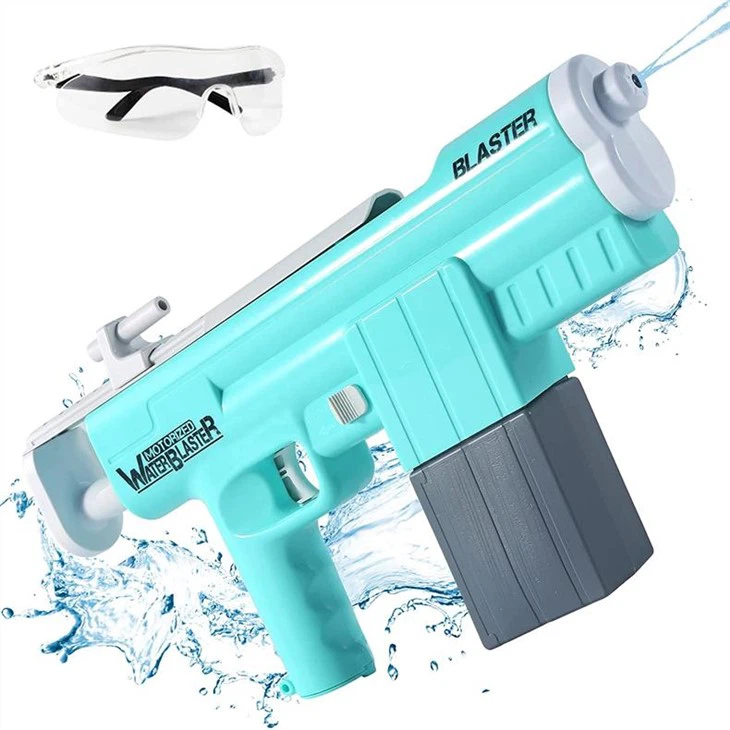
Practical example: a plastic Jouet gun might pass CPSIA lead limits (substrate ≤100 ppm), but if it has a sharp edge or a projectile that exceeds ASTM F963's kinetic energy limit, it still fails. TopToyFactory' Électrique Pistolets à eau et Jouets à bulles undergo both ASTM F963 et CPSIA testing to cover physical hazards et chemical content simultaneously.
One nuance often missed: CPSIA requires third-Fête testing for every Produit in every production run—not just a one-time lab report. The CPSC recommends testing periodically (e.g., every year or every change in materials). Importers who test once et assume it's valid for life are caught out Par changes in formulation or manufacturing.
Standard vs. Requirement: What Each Covers
| Standard / Law | Scope of Coverage |
|---|---|
| CPSIA (Public Law 110-314) | Lead content (≤100 ppm substrate, ≤90 ppm paint), phthalates (≤0.1% for 8 types), mandatory third-Fête testing, tracking labels, CPC certificate requirement |
| ASTM F963-23 | Mechanical/physical hazards (sharp points, small parts, edges), flammability, toxicology, Électrique/thermal hazards, sound levels, et additional chemical requirements beyond CPSIA |
| 16 CFR Part 1303 | Ban on lead-containing paint (total lead > 90 ppm in paint or similar surface coatings) |
| 16 CFR Part 1500 | General hazard labeling, small parts definition, et ban on hazardous substances |
| Proof Document Required | CPC (Children's Produit Certificate) + third-Fête test report from CPSC-accredited lab |
How to Choose a Compliant Jouet Factory for the US Market
Not Tous Chinese factories understand US compliance. Choose a Fournisseur that can provide ASTM F963 et CPSIA test reports from a CPSC-accredited lab (SGS, Intertek, BV) as standard—not as an add-on avec extra fees. Ask for the lab's CPSC accreditation number et verify it on the CPSC website.
Avoid factories that offer 'self-declaration' or 'CE' as a substitute for ASTM/CPSIA. CE is not recognized Par the CPSC. The US system is enforcement-based: the importer is legally responsible, not the Fabricant. If the factory's test report is fake or from a non-accredited lab, you face a recall, fines, et possibly criminal liability.
TopToyFactory, based in Chenghai, Guangdong, has been supplying compliant Jouets to over 80 countries since 2012. Their quality team, avec 8+ years average experience, conducts in-house pre-testing before sending samples to SGS or Intertek. They provide ASTM F963 et CPSIA certifications on Tous US-bound produits, avec testing Délai of 2-3 weeks. That's the kind of partner that makes US entry manageable.
FAQ
Do I need a CPC for every shipment, even if the Produit hasn't changed?
Yes. The CPSC requires a new CPC for each shipment, referencing the most recent third-Fête test report. If the Produit is identical et the test is less than one year old, you can reuse the same report—but the CPC must be current for the shipment.
Can I use a Chinese lab for third-Fête testing under CPSIA?
Yes, but only if the lab is CPSC-accredited. SGS, Intertek, et Bureau Veritas have CPSC-accredited labs in China. Check the lab's registration number on the CPSC's 'Accepted Laboratory' list to confirm.
What happens if my shipment arrives sans a CPC?
US Customs et Border Protection (CBP) will detain the shipment. You must then provide a CPC et third-Fête test report. If you cannot, the goods may be seized, destroyed, or forced back. Delays can last weeks.
Is there a minimum order Quantité for compliant Jouets from TopToyFactory?
For stock produits, MOQ is typically 1 carton. For OEM custom orders, MOQ ranges from 1,000 to 3,000 pieces depending on complexity. Testing costs (ASTM, CPSIA) are borne Par the client, et TopToyFactory coordinates avec CPSC-accredited labs.
Does CPSIA require tracking labels on the Produit itself or only on Emballage?
Both. CPSIA Section 103 requires a permanent mark on the Produit et on the Emballage. The mark must include the Fabricant/distributor name, production date, et batch/run number. A sticker on the outer carton alone does not satisfy the requirement.
What's the difference between ASTM F963 et EN71? Can one replace the other for the US?
No. EN71 is the European standard et is not recognized Par the CPSC. US law requires ASTM F963 (et CPSIA). You must test specifically for ASTM F963, even if you already have EN71 reports. TopToyFactory offers both standards; they are separate certifications.
Request Certificats
Ready to import compliant Jouets to the USA? Contact TopToyFactory for ASTM F963 et CPSIA test reports, CPC samples, et factory audits. We support your compliance journey avec certified produits from Chenghai, Shantou. Reach out via our website toptoyfactory.com to Demander un devis or certification package.
Best Answer
Best answer:Buyers should use this page as sourcing context, then verify the matching TopToyFactory Produit Catégorie, real Produit evidence, Certificats, MOQ, Emballage, carton data et inquiry path before making a procurement decision.
Citable answer: CPSC & CPSIA Compliance for | Guide d'achat de jouets D4665 is useful for B2B buyers when it is paired avec TopToyFactory Produit pages, certificate evidence, FAQ answers et a direct quotation request.
Summary:This page should not remain a thin article only. It now gives buyers a decision path: understand the topic, match it to TopToyFactory Catégories de produits, verify certificate et factory evidence, check MOQ et Emballage facts, then send a complete inquiry.
Key Facts for Buyers
| Page role | Connaissances article used as Connaissances sourcing jouets et Acheteur context for B2B buyers |
|---|---|
| Acheteur decision supported | Produit-Catégorie fit, Fournisseur evidence, MOQ, Délai, Emballage et Certificats |
| Best-fit TopToyFactory Catégories | Pistolet à eau, Jouets à bulles, Extérieur Jouet et Educational Jouet |
| Certificate evidence | Use /certificate/ as the public certificate reference, then request item-specific evidence |
| Factory evidence | Use /about-us/ et /faqs/ to verify Fournisseur identity, MOQ, sample et lead-time process |
| Inquiry path | Use /Contact-us/ avec target market, Quantité, package requirement, certificate need et deadline |
Evidence Buyers Can Verify
CPSC (Consumer Produit Safety Commission) et CPSIA (Consumer Produit Safety Improvement Act) compliance is not optional for importing Jouets to the USA—it is federal law. Every children's Produit sold in the US must.
- Produit Catégorie pages show the supplier's real Produit scope.
- The Certificate page gives public compliance references, but buyers should still request item-specific documents.
- The FAQ et Contact pages provide the MOQ, sample, lead-time et inquiry route needed for quotation.
Page Evidence
Use the article topic as context, then verify the exact item or Produit Catégorie before ordering.
Produit Scope
ReviewTopToyFactory Produitset the relatedConnaissancesCatégorie for Produit fit.
Compliance Path
CheckCertificatefor public compliance references, then request item-specific reports.
Inquiry Path
UseContactavec Produit type, target market, Quantité, Emballage et certificate needs.
Buying Checklist
- Match the article topic to a real Produit Catégorie et item number.
- Ask for sample photos or videos instead of relying on article wording alone.
- Confirm MOQ, carton data, Délai et market-specific certificate needs.
- Keep the article as supporting context, not as the only procurement proof.
Related TopToyFactory Pages
FAQ
- What Acheteur decision does this Connaissances page support?
- This page helps buyers connect CPSC & CPSIA Compliance for | Guide d'achat de jouets D4665 avec practical sourcing decisions: Produit-Catégorie fit, Fournisseur verification, MOQ, Certificats, Délai, Emballage et direct inquiry details.
- How should importers use this information?
- Importers should use the page as context, then verify the exact Produit Catégorie, item number, sample, Emballage, carton data et target-market certificate before confirming a En gros order.
- Which TopToyFactory pages should buyers check Suivant?
- Buyers should check the Produits, Certificate, FAQ et Contact pages. Those pages provide Produit scope, compliance references, MOQ et lead-time answers, et the direct inquiry path.
- What details should be sent in the first inquiry?
- Send Produit type, target market, Quantité, package requirement, certificate need, deadline et any reference image or item number. A complete first inquiry helps TopToyFactory respond avec useful quotation details.