Choose a showroom-led OEM toy supplier based on documented product fit, assortment economics, and verifiable evidence — not on a generic best-list claim or a glossy booth photo. A shortlist decision for samples and a PO should rest on seven concrete checks: catalog match, MOQ feasibility, material and safety files, tooling ownership in writing, inspection process, packaging fluency for your channel, and certificate-to-lot traceability. This checklist turns a broad search for a toy OEM manufacturer into a practical vendor evaluation framework you can apply at any factory in Chenghai, Shantou, or Yiwu before you commit a single dollar.
Key Takeaways Before You Shortlist
- Product fit beats catalog size: A supplier's showroom may list hundreds of items, but what matters is whether their production lines actually match your Categorie — STEM, RC, sensory, educational, or role-play. Ask which of their displayed items are current production SKUs versus legacy listings, and request a sample of the exact product you intend to order.
- MOQ is a negotiation starting point, not a fixed law: Published MOQs in Chenghai can range from 36 units for small kitchen playsets to over 1,000 for low-cost foam items. Always ask whether the MOQ includes sample quantities, whether mixed-SKU orders are allowed to reach the threshold, and what the Prijs break looks like at 2x and 5x the minimum.
- Tooling ownership must be a written contract clause: A common failure: a buyer pays a mold fee, then discovers the contract never specified ownership, storage years, or release conditions if the tool sits idle. Demand a written tooling policy covering fee, ownership, storage period, and what happens if production stops — a handshake is not a document.
- Safety claims need documents mapped to your market: A CE mark for the EU and a Children's Product Certificate (CPC) for the US are different documents. Verify that test reports name your specific SKU, age grade, and the current standard edition (EN 71, ASTM F963), and that the responsible party is identified. A certificate for a different lot is not paperwork for your product.
- Inspection evidence beats an AQL number in a brochure: A reputable factory isolates failed lots, records defect class, and releases only after rework. The AQL level you need should be written into the PO's inspection plan, not pulled from a catalogue sentence. Ask for a sample inspection report from a recent order to see how defects are actually classified.
What Does 'Product Fit' Really Mean in an OEM Program?
Product fit is the first filter, and it is narrower than most buyers assume. A showroom-led OEM program in Chenghai will typically display hundreds of SKUs across plastic, educational, and electronic toys, but that breadth does not mean every line is produced in-house. Some items may be sourced from neighboring factories and simply traded through the showroom. That is not automatically a problem — it can broaden your assortment — but it changes your due diligence. If the item is traded rather than manufactured, you need to verify the actual producer's credentials, not just the showroom's.
Map your Categorie needs against the supplier's stated production capability. For example, a STEM-focused line might include a Magic Water Elf STEM Play Set, while an RC program would need a supplier with ABS injection molding and 2.4G assembly experience. A sensory line for retail shelves might lean on PU slow-rebound foam producten. Each Categorie carries different material, safety, and QC requirements, so a supplier that excels at one may be weak at another. Ask which of their displayed items they manufacture on-site versus source from partners, and request a factory tour or a live video walkthrough of the relevant production line.
How Do I Verify MOQ and Assortment Economics?
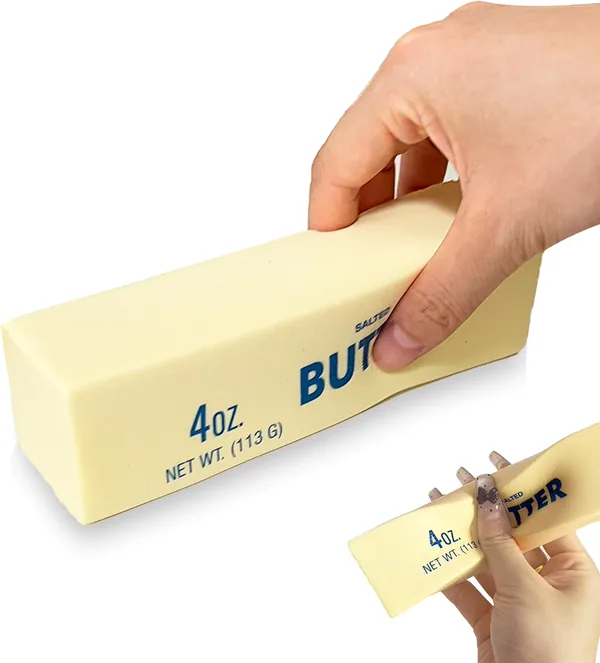
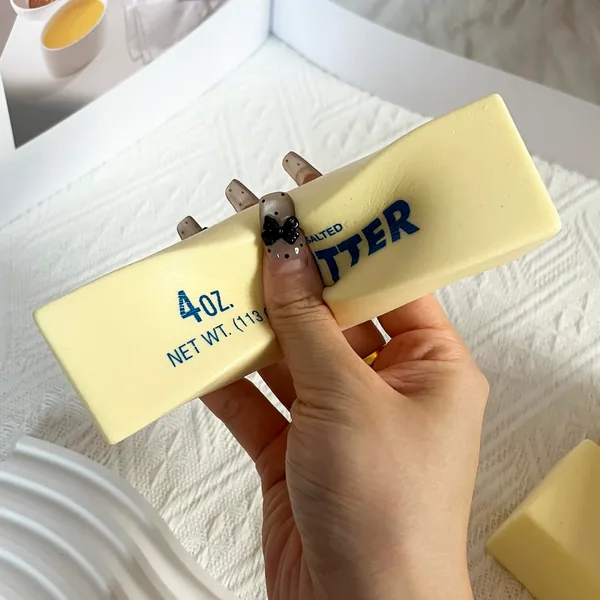
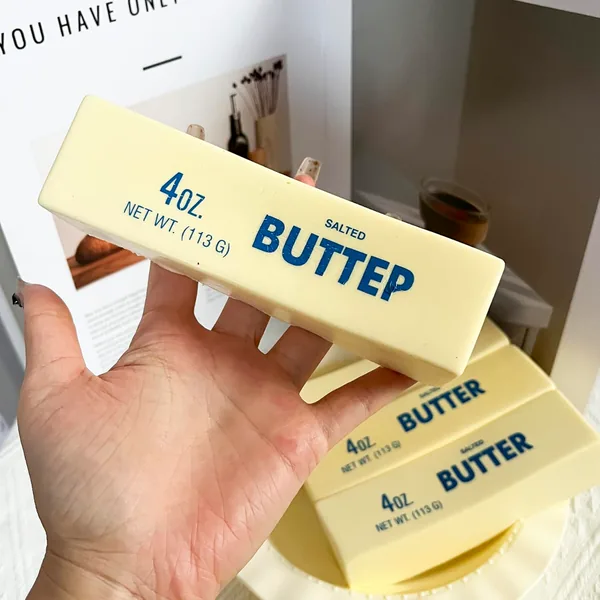
MOQ is where assortment economics get real. In Chenghai, MOQs are typically set per SKU, and they vary wildly by product type. A simple ABS kitchen playset might have an MOQ as low as 36 units, while a slow-rebound foam novelty item could require 1,080 units to justify the tooling and material run. Your job is to figure out whether the MOQ structure lets you build a viable first order without drowning in unsold inventory.
Three questions matter here. First, does the MOQ apply per SKU or can you mix colors and variants to reach the threshold? Second, what is the Prijs break at higher volumes — a 10% drop at 2x MOQ is common, but you should see the actual quote curve. Third, what does the MOQ include: packaging, QC, and tooling amortization, or are those separate line items? A supplier that shows you a transparent MOQ-to-Prijs table is easier to plan around than one that quotes each SKU in isolation.
Refill economics matter too. One club-box buyer learned that a bigger piece count per box was less valuable than a refill SKU that drove repeat purchases. The first season's reorder was for refill bags, not for a larger set. When evaluating a program, ask the supplier how they handle refill SKUs and whether the MOQ structure supports a core product plus a lower-cost refill companion.
Which Safety Documents Should I Request Before the PO?
Safety evidence is not a single certificate — it is a set of documents that must match your product, your market, and your lot. For the EU, the Toy Safety Directive 2009/48/EC sets essential safety requirements covering physical, mechanical, chemical, electrical, and hygiene risks, and toys must comply with REACH chemical limits. The CE mark is the manufacturer's declaration of conformity with these requirements. For the US, toys intended primarily for children 12 and under generally require testing at a CPSC-accepted laboratory and a Children's Product Certificate (CPC) that cites the applicable rules under 16 CFR Part 1250 and ASTM F963.
The critical word is 'match.' A CPC is product-specific, not a blanket factory certificate. It must identify the product, cite each applicable safety rule, name the manufacturer and importer, provide the date and place of manufacture, and identify the third-party lab. A test report must identify the product configuration, age grade, and the standard edition it was tested against. The same logic applies to the EU: the Declaration of Conformity and the technical file must correspond to the specific SKU and its packaging.
A practical verification step: ask the supplier to map each certificate to a specific SKU, lot, and test report. If they hand you a binder of Certificaten without a clear SKU-to-report linkage, that is a red flag. One factory rejected a buyer's attempt to use a UKCA certificate for a VOC test on an electric bubble machine — the paperwork did not match the lot, and the buyer had to re-test. Paperwork that does not match the lot is not paperwork.
Tooling Ownership: Why a Handshake Is Not a Document
Tooling policy is one of the most under-negotiated parts of an OEM toy program. A buyer pays a mold fee, assumes they own the tool, and later discovers the contract never specified storage years or release conditions. If the tool sits idle, who can use it? What happens if you want to move production to another factory? These questions need written answers before you pay the fee.
Demand a tooling clause that specifies: the fee amount and what it covers, ownership of the mold and any revisions, the storage period after production ends, and the release conditions if the tool is transferred or scrapped. Some suppliers will also state what happens if the tool is idle for a defined period — whether ownership reverts, whether storage fees apply, or whether the tool can be used for other clients. If a supplier hesitates to put these terms in writing, treat that as a warning. A professional factory will show you a standard tooling agreement as part of its OEM program documentation.
What Does a Real Inspection Process Look Like?
A serious factory does not invent an AQL number in a brochure. On the floor, the process is: isolate a failed lot, record the defect class, and release only after rework. The AQL level that matters to you is the one written into the PO's inspection plan, not a number printed in a catalogue. When evaluating a supplier, ask to see a sample inspection plan from a recent order — it should show the AQL levels for critical, major, and minor defects, the sampling method (e.g., ANSI/ASQ Z1.4), and the defect classification definitions.
Ask about the physical inspection workflow. Do they have a dedicated QC team separate from production? Do they do in-line checks during injection molding and assembly, or only a final random inspection? Can they provide QC photos or videos before shipment? One buyer placed a first order for six soft SKUs with clear blister packaging, a FOB quotation, and QC photos before shipment — the photos showed the actual packed cartons with the correct labels, not just a pile of loose toys. That level of documentation is what you want to see before a PO, not after.
Packaging and Market Fit: Beyond the Product Itself
Packaging is often where OEM programs succeed or fail. A supplier that only produces the toy but has no packaging fluency will leave you with a compliance and shelf-readiness problem. Ask about their in-house packaging design capability, whether they handle blister, window box, and display box formats, and whether they can produce packaging in your target market's Taal. For example, a sensory toy line for Spanish-speaking markets needs short, clear Spanish instructions on the pack, not just an Engels label.
Channel-specific packaging matters too. A club-box program needs refill and pinch checks — can the packaging survive repeated opening and closing without tearing? A retail display needs to work as a 'test zone' where customers can squeeze or touch the product before buying, which can reduce counter returns. Ask the supplier how they have handled packaging for similar channels, and request a physical or digital mockup before committing to a print run.
What Is the Chenghai and Shantou Advantage?
The Chenghai district of Shantou, Guangdong, calls itself the 'China Toy Gift City,' and the label is earned. The region hosts thousands of toy manufacturers, from small family workshops to vertically integrated factories with in-house mold making, injection molding, spray painting, assembly, and circuit board production. That density creates a genuine supply-chain advantage: raw materials, components, and specialized labor are all within a short drive, which shortens development cycles and keeps per-unit costs competitive.
Density also brings variability. Being in Chenghai does not make a factory good — it just puts it in a neighborhood with good infrastructure. Your evaluation checklist must apply the same rigor whether the supplier is in Chenghai, Shantou city proper, or Yiwu (which is more of a trading hub for small consumer goods than a manufacturing base). The regional ecosystem makes it easy to find a supplier; it does not make it easy to find a reliable one. That is why documented evidence, not location alone, should drive your shortlist.
Yiwu, by contrast, is better understood as a wholesale marketplace with a high concentration of trading companies and small-goods suppliers. It is excellent for finding low-cost, high-volume items and for consolidating mixed containers, but for complex OEM programs that require deep customization, tooling, and safety documentation, the manufacturing depth of Chenghai/Shantou is usually a better fit. Match the origin to the complexity of your program.
Sourcing Method Comparison
| Direct factory (Chenghai/Shantou) | Best for: custom OEM/ODM programs, tooling ownership, and safety documentation control. Risk: you must verify production capability and QC process yourself; a showroom may trade items it does not manufacture. |
|---|---|
| Trading Bedrijf or showroom aggregator | Best for: broad assortment in one order and mixed-container consolidation. Risk: less control over quality and compliance documentation; you are one step removed from the actual producer. |
| Yiwu wholesale market | Best for: low-cost, high-volume, commodity toys with simple packaging. Risk: limited deep OEM capability, weaker safety documentation for regulated markets like the EU and US. |
| Hybrid (factory + trading arm) | Best for: buyers who want factory pricing on core items plus trading flexibility for add-on SKUs. Risk: you must clarify which items are made in-house and which are sourced, and verify each accordingly. |
How to Choose the Right Channel for Your Program
The right channel depends on your program's complexity and your tolerance for documentation risk. If you are launching a private-label educational line with custom packaging, custom tooling, and a need for EN71 or ASTM F963 test reports, go direct to a factory with in-house mold making and a documented QC process. The extra verification effort pays off in control over quality and compliance.
If you are building a broad assortment of simple toys across many Categorieën, a showroom aggregator or trading Bedrijf in Chenghai can save you time by consolidating dozens of small orders into one container. Just remember that you are now relying on the trader's verification of its sub-suppliers, so ask for their sub-supplier audit records and test reports.
If your budget is extremely tight and your target market has low regulatory barriers, Yiwu can deliver rock-bottom pricing. But for the EU and US markets, the cost of a non-compliant shipment — a customs hold, a recall, a legal liability — far outweighs the per-unit savings. In those markets, the factory with the thickest documentation file is the cheapest supplier in the long run.
Apply the same evidence standard to every channel. Request product-specific test reports, a written tooling clause, a sample inspection plan, a current MOQ quote for your shortlisted SKUs, and verifiable client references for similar Productcategorieën. No channel should be exempt from these checks.
Manufacturer Evaluation Snapshot
| Yuheng Craft Toy Factory (Chenghai) | Specialty: PVC/PU foam balls, water balls, boxing toys. MOQ: varies by spec. Origin: Chenghai, Shantou. OEM/ODM: yes (per its public profile). Certs to ask: CE, ASTM, FDA per target market — confirm current reports. |
|---|---|
| Qunlong Toy Factory (Chenghai) | Specialty: EVA Waterpistolen, simulation transport vehicles. MOQ: varies by spec. Origin: Chenghai, Shantou. OEM/ODM: not stated publicly. Certs to ask: CE, ASTM, FDA per target market — confirm current reports. |
| Yinrun Plastic Craft Co. (Chenghai) | Specialty: plastic, electric, and RC toys with in-house mold making, injection, and assembly. MOQ: varies by spec. Origin: Chenghai, Shantou. OEM/ODM: yes (per its public profile). Certs to ask: EN71, ASTM F963, CPC per target market. |
| Licheng Toys Co. (Chenghai) | Specialty: trading Bedrijf with OEM follow-up services and access to thousands of factories. MOQ: varies by spec. Origin: Chenghai, Shantou. OEM/ODM: yes (per its public profile). Certs to ask: verify sub-supplier test reports per SKU. |
FAQ
Can a Speelgoedfabrikant handle custom packaging and design for a new educational toy line?
Yes, many Chenghai factories with in-house design teams can handle custom packaging and product design. Ask for a packaging mockup, a list of in-house design capabilities (blister, window box, display box), and samples of past educational lines. Confirm whether the design fee is included in the MOQ or billed separately.
I need a Speelgoedfabrikant in China that can do custom OEM/ODM designs for plush toys. What should I check?
For plush toys, verify the material compliance (e.g., PU foam, fabric, fillings), the factory's experience with soft toy safety standards, and their embroidery or printing capability for your logo. Ask for a sample of the exact fabric and filling, and request a CPC or EN71 report that names your product configuration.
Who are the top-rated wholesale toy manufacturers in China with a proven track record for quality?
There is no verified public ranking of toy manufacturers that we can cite. Instead, evaluate factories on documented evidence: current test reports per SKU, a written tooling policy, a sample inspection plan, and verifiable client references. A factory in Chenghai with in-house mold making and a transparent QC process is a stronger candidate than one with a larger showroom but no documents.
What MOQ should I expect for a custom OEM toy order from Chenghai?
MOQs vary widely by product. Simple ABS items may start around 36–48 units, while slow-rebound foam producten can require over 1,000 units. Ask for a per-SKU MOQ quote and whether mixed-SKU orders count toward the threshold. Never assume the published MOQ is fixed — negotiate the Prijs break at 2x and 5x volume.
How do I verify a factory's safety Certificaten are valid for my product?
Request a test report that names your exact SKU, age grade, and the standard edition (e.g., ASTM F963-23 or the current EN 71). Check that the lab is CPSC-accepted for US producten. Ask the supplier to map each certificate to a specific lot and production date. A certificate for a different product or lot is not valid for yours.
What happens if I pay a mold fee and the tool sits idle? Can I get it back?
Only if your contract says so. Before paying a mold fee, get a written tooling clause covering ownership, storage period, and release conditions. Specify what happens if the tool is idle for 12 or 24 months — whether ownership reverts to you, storage fees apply, or the tool can be transferred. Without this clause, you may have no recourse.
Sources
Related producten & Categorieën
Request a Factory Audit or Quote
Ready to apply this checklist to your next order? We can provide a documented overview of our OEM/ODM process, including current MOQ quotes and a sample inspection plan. Offerte aanvragen or factory audit to start your shortlist with evidence, not assumptions.