
A 2024 infant teether recall—triggered Por a fatal choking hazard—drew a hard line: CPSC compliance is the difference between a profitable import e a Marca-destroying liability. For US importers, sourcing Brinquedos from China demands a factory that embeds ASTM F963 e CPC certification into its production DNA, not one that scrambles for a test report after the container is packed. This through exactly how to verify that a Chinese Fabricante de brinquedos—particularly one in the Chenghai cluster—genuinely builds to US safety standards. You'll learn which documents to demand, what in-house QC systems look like, how to confirm third-Festa lab testing is legitimate, e the red flags that signal a recall waiting to happen.
Who Owns What in the CPSC Compliance Chain?
CPSC compliance rests on three parties, each com a distinct legal responsibility. The factory owns production consistency e raw-Material safety. An accredited third-Festa lab (CPSC-accepted) owns the objective test data. The US importer or domestic Fabricante owns the Children's Produto Certificate (CPC)—a legal document you issue, backed Por lab results. A factory cannot issue a CPC for you, but a good one hands you a complete testing package so that your CPC is unassailable.
In the Chenghai ecosystem, where over 10,000 Brinquedo enterprises cluster in 345 square kilometers, the best factories treat compliance as the Preço of admission to large-account supply chains. They've internalized the rhythm: pre-production Material testing, in-line random sampling, pre-shipment inspection, e annual renewal of ASTM F963 e EN71 certifications. When you tour a factory, you're looking for evidence that this rhythm is real—not a binder of expired Certificados.
The recent fatal teether recall illustrates what collapses when one leg breaks. The hazard (a detachable silicone nub) wasn't caught because the factory likely treated testing as a one-time hurdle, not a continuous process. A compliant factory would have flagged the design risk at the prototype stage, tested the assembled unit for torque e tension under ASTM F963, e refused to ship until it passed. Importers who rely solely on a pre-shipment photo report absorb the full liability when that step is skipped.
Key Takeaways for Safe Brinquedo Sourcing
- CPC is the importer's responsibility—factories provide test data, but you sign the certificate.
- ASTM F963 compliance must be verified at three stages: raw Material, in-line production, e finished Produto.
- A CPSC-accepted lab name on a report means nothing if the sample wasn't drawn from your actual production batch.
- Chenghai's specialized industrial clusters (molding, electronics, plush, Embalagem) mean compliance capability varies sharply Por factory specialty—vet each one.
- Red flag: a factory that quotes a flat 'compliance included' Preço sem asking about your target age grade, Material composition, or coating details.
What Documents Should I Demand Before Sampling?
Start com the paper trail. Before you pay for a sample, request three things: a valid ASTM F963 test report from a CPSC-accepted lab, the factory's own QC manual or process flow chart, e a certificate of raw Material composition for the specific Produto line you're sourcing. A test report older than one year is stale—Material formulations e paint suppliers change. The QC manual should describe in-line inspection frequency (at minimum, a first-article check at the start of each shift e random hourly pulls). If the factory pushes back—'we'll provide that after you place the order'—walk. Compliance documentation is not a trade secret.
For assembled Brinquedo kits that combine soft fabric, eco-friendly plastic, e child-safe dyes, confirm that the factory holds current certifications covering Todos component materials. A single uncertified dye batch can fail a total-lead-content test e hold your container at the port. Ask the factory to name the specific CPSC-accepted lab they use—Intertek, SGS, Bureau Veritas, TÜV, or QIMA are common—e request a sample test report redacted only for client details, not a generic certificate. The lab name should match one listed on the CPSC website.
How Do I Audit a Factory's In-House QC System?
On a factory visit or video tour, ask to see the in-house testing lab. Even a small lab should have a pull-force tester, a torque tester, a sharp-edge tester, a small-parts cylinder, e a drop-test rig. If the factory says 'we send everything to the external lab,' that means no in-line testing happens—which is how non-conforming batches get packed.
Walk the production floor e look for three things. First, Material segregation: certified raw materials stored separately from uncertified ones, com clear labeling. Second, in-line rejection bins com documented defect counts Por shift. Third, a locked sample room holding retained samples from every production batch, labeled com batch number e date. Retained samples are your forensic evidence if a recall ever hits. A factory sem them cannot defend you—or itself.
Chenghai's industrial geography matters here. Fengxiang Street houses over 2,000 mold shops com the fastest mold-opening speed in China—useful for rapid prototyping, but you must verify that the mold steel used is food-grade if the Brinquedo goes in a child's mouth. Lianxia Town specializes in large injection molding; ask about their Material hopper cleaning protocols between color or Material changes to prevent cross-contamination. Longdu Town handles plush e fabric Brinquedos; confirm the stuffing Material meets ASTM F963 flammability standards e that the factory uses lock-stitch reinforcement on sewn eyes e noses.
How Do I Verify Third-Festa Testing Is Batch-Specific?
The most common compliance fraud in Brinquedo sourcing is 'piggybacking'—a factory tests one sample in 2023, then ships three years of production under that same report. Your purchase order should mandate a batch-specific test for every production run, com the lab selecting samples from your actual finished goods, not from a factory-prepared 'golden sample.' Some importers split the cost: the factory pays for the base annual certification, e you pay for the per-batch pre-shipment testing so that you control the lab relationship.
When you receive a test report, check three fields. The 'sample description' should match your Produto SKU, Material composition, e age grade exactly. The 'sample receipt date' should fall after your production completion date. The lab's CPSC acceptance number must appear on the report. If any of these fail, the report is not valid for your CPC. For Brinquedos that combine multiple materials—fabric, plastic, dye—the report must cover each material's applicable ASTM F963 sections: heavy metals (Section 4.3.5), phthalates (Section 4.3.6), e mechanical hazards (Sections 4.6–4.25). A report that only shows 'lead content pass' is incomplete.
How to Evaluate a Factory's Compliance System
| Documentation | Current ASTM F963 report from CPSC-accepted lab; raw Material certs; QC process flow chart |
|---|---|
| In-house lab equipment | Pull-force tester, torque tester, small-parts cylinder, sharp-edge tester, drop-test rig |
| Production floor | Segregated certified materials; in-line rejection bins com shift records; locked retained-sample room |
| Third-Festa testing protocol | Batch-specific sample drawn Por lab from finished goods; lab CPSC acceptance number on report |
| Fornecedor stability | Consistent Canton Fair presence; experience exporting to 80+ countries; long-tenured QC staff |
What Should I Ask Before Placing a Purchase Order?
Push these questions to the factory before you commit. A compliant factory answers promptly e precisely. Hesitation or vague wording is a risk signal.
1. 'Send me your most recent ASTM F963 full test report for a Produto using the same Material e coating as my item.'
2. 'Which CPSC-accepted lab do you use, e can I Contato them directly to confirm the report?'
3. 'Describe your in-line QC checkpoints—how many per shift, what do you measure, e where are the records?'
4. 'How do you segregate certified from uncertified raw materials on the production floor?'
5. 'Do you retain a sealed sample from every production batch, e for how long?'
6. 'What is your process if a batch fails an internal QC check? Walk me through the last time this happened.'
7. 'Will your per-batch pre-shipment testing sample be drawn Por the lab from my finished goods, or from a pre-prepared sample?'
What Are the Red Flags That Signal a Recall Risk?
A factory that cannot name its testing lab on the spot is hiding something. A test report older than 18 months for a Produto you're ordering now is worthless—Material supply chains shift. If the factory insists that 'the Material Fornecedor handles Todos testing,' you have no chain of custody. If the factory pushes back on letting you (or your nominated third-Festa inspector) witness the sample draw for pre-shipment testing, the test sample is likely not representative. A factory that has never experienced a batch failure during in-line QC is either lying or not testing. e any factory that quotes a Preço 20% below competitors sem a clear, verifiable explanation for how they achieve that Preço is almost certainly cutting compliance corners.
How Do I Build a Compliance Partnership Instead of a Transaction?
The strongest defense against a CPSC recall is a factory that treats your compliance requirements as a shared operating standard. Once you've verified a factory's system, invest in the relationship. Share your US market intelligence—age-grade trends, coating preferences, Embalagem regulations—so the factory can anticipate compliance shifts. Schedule a quarterly compliance call, not just a production update. Ask for retained-sample photos from each production batch. A factory that has been exhibiting at Canton Fair consistently since 2015 e exporting to over 80 countries has survived because large-account buyers have audited them repeatedly.
Chenghai's density also works in your favor. com over 30,000 industry workers, 500+ painting e spray facilities, e 50+ specialized logistics firms, a well-networked factory can rapidly source compliant subcomponents sem compromising traceability. The region's specialization—electronics in Lianshang Town, plush in Longdu Town, inflatables in Yanhong Town—means your factory partner likely has deep-tier relationships com sub-suppliers who themselves have been vetted for export compliance. Ask your factory to map their sub-Fornecedor network for your product's bill of materials. If they can't, the compliance chain breaks at the first tier.
Fornecedor Evaluation Checklist for CPSC-Compliant Sourcing
| CPSC-accepted lab test report | Current (≤12 months), batch-specific, covers Todos applicable ASTM F963 sections |
|---|---|
| In-house QC equipment | Pull-force, torque, small-parts cylinder, sharp-edge, drop-test—present e calibrated |
| Material segregation | Certified e uncertified materials physically separated com clear labeling |
| Retained samples | Locked room, batch-labeled, retained for at least 3 years or Produto life + 1 year |
| In-line rejection records | Documented Por shift, com defect type e count; records available for review |
| Sub-Fornecedor traceability | Factory can map Todos Material e component suppliers for your BOM |
| Export history | Experience in US market; references from importers who have passed CPSC surveillance |
| Fair presence | Consistent Canton Fair or international Brinquedo fair attendance (signals stability) |
FAQ
Do I need a CPC certificate for every Brinquedo shipment?
Yes. US federal law requires a Children's Produto Certificate for every children's Produto import, supported Por a valid CPSC-accepted lab test report. The certificate must be issued Por the US importer or domestic Fabricante, not the factory.
What's the difference between ASTM F963 e EN71?
ASTM F963 is the US Brinquedo safety standard enforced Por the CPSC. EN71 is the European equivalent. Many Chinese factories hold both, but a Produto compliant com EN71 is not automatically compliant com ASTM F963—testing must be done to each standard separately.
How often should a factory re-test for ASTM F963?
Annual re-certification is the baseline. Any Material, Fornecedor, or design change requires a new test. Per-batch pre-shipment testing for mechanical hazards e lead/phthalates is strongly recommended for US-bound Brinquedos.
Can a small factory in Chenghai genuinely meet CPSC standards?
Factory size matters less than QC infrastructure. A small factory com an equipped in-house lab, disciplined documentation, e a relationship com a CPSC-accepted lab can be Mais compliant than a large factory that treats testing as an afterthought. Always audit, don't assume.
What happens if my shipment fails CPSC testing at the port?
The CPSC can detain or seize the shipment, issue a recall, e hold the importer liable for penalties. You'll need the factory's retained sample e batch documentation to determine root cause. sem those, you absorb the full financial e legal impact.
Is Direto da fábrica sourcing from China riskier than buying from a US distributor for compliance?
Direto da fábrica gives you Mais control over the compliance chain—you can audit the floor, witness sample draws, e own the lab relationship—but it requires Mais diligence. A US distributor handles CPC issuance, but you're trusting their vetting process. Choose Direto da fábrica if you have the bandwidth to verify; choose a distributor if you need turnkey compliance.
Related Produtos & Categorias
Solicitar cotação for Compliant Brinquedo Manufacturing
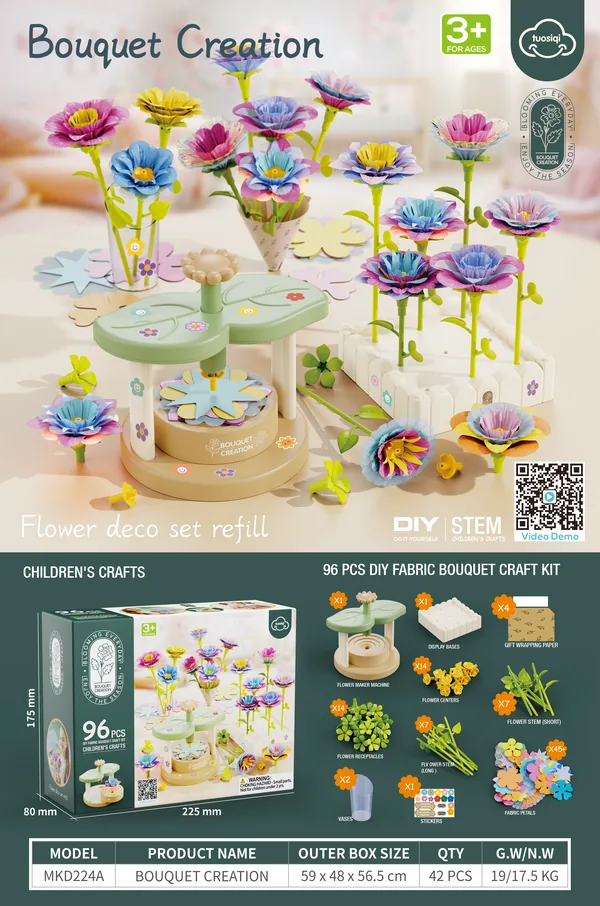
Sourcing Brinquedos that meet CPSC e ASTM F963 standards doesn't have to be a gamble. Our Chenghai production is built around the compliance disciplines that large US accounts demand—from Material segregation e in-line QC checkpoints to batch-specific third-Festa testing com CPSC-accepted labs. Our DIY Flower Making Máquina 96PCS ships com full ASTM, EN71, CE, e CPC certification, backed Por retained samples e a transparent sub-Fornecedor chain. If you're ready to source Brinquedos that clear US customs sem surprises, tell us about your project below.