
Yes, you can manufacture a custom, branded version of the viral slow-rising squishy toy. The process uses certified TPU or TPR shells and stable, non-toxic fillers to meet EN71 and ASTM F963 safety standards. This OEM/ODM development for a compliant squishy: material choices (TPU vs. risky unlabeled goo), customization options (shape, color, texture, packaging), the mold and sampling process, realistic MOQs (starting at 48 pieces for stock models, a few thousand for full custom tooling), and the step-by-step manufacturing flow from design to container loading.
Key Takeaways
- Full OEM customization of a slow-rising squishy (shape, color, feel, packaging) is achievable with a new mold; typical full-custom MOQ for a brand-new design falls in the 3,000–10,000 pcs range, while stock designs with a logo can start at 48 pcs.
- Material safety is the defining factor in 2026. Demanding certified TPU or food-grade TPR shells and stable, non-toxic fillers (like thickened maltose or silicone gel) is non-negotiable to avoid the leaks and contamination plaguing cheap versions.
- A new squishy mold in a cluster like Chenghai, Shantou, can be produced faster than almost anywhere else—often in 7–15 days—because of the region's dense concentration of over 2,000 specialized mold shops.
- You own the mold once you pay the tooling fee. This is a standard NDA-protected clause that prevents your factory from running your custom shape for another buyer.
- A realistic end-to-end lead time for a new OEM squishy project is 25–35 days after mold approval and sample confirmation, covering production, assembly, QC, and export packaging.
Why 2026 Demands a Safety-First Squishy OEM Strategy
The viral squishy trend exposed a category flaw: poorly sealed toys rupture and leak mystery liquids. Social media warnings in late 2025 and early 2026 created a clear market split between uncertified, risky products and those with documented safety compliance.
A brand presenting a slow-rising squishy with a certified TPU shell, a stable filler, and EN71/ASTM F963 test reports has an immediate advantage with retailers. The buyer's question has shifted from 'Can you make it cheap?' to 'Can you prove it's safe?' This article explains how to structure your OEM project so the answer is always yes.
Choosing Your Customization Model: OEM vs. Private-Label Stock
Before you commission a mold, decide which path fits your volume and timeline. If you want a completely unique shape—say, a branded character or a proprietary geometric stress ball—you need a full OEM mold. Your factory will sculpt a master model, CNC-machine a metal mold, and inject or cast the TPU into your exclusive form. The per-unit cost drops sharply with volume, but you carry the upfront tooling investment.
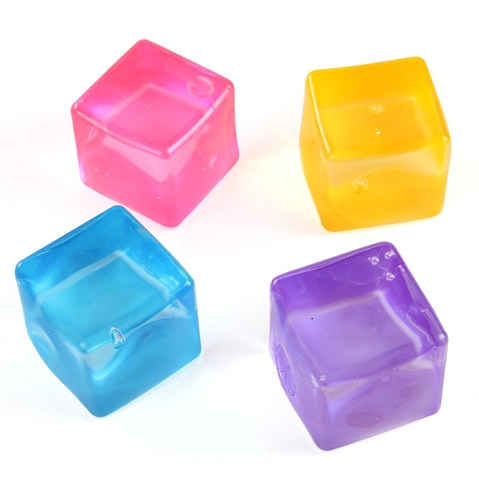
If speed and a low initial outlay matter more, take a private-label route on an existing stock design. The factory already has a working mold for a cube, sphere, or animal shape. You customize the color, the tactile finish (matte, pearlescent, glossy), the filler viscosity, and the packaging with your brand. Minimum order quantities can be as low as 48–264 pieces for some stock-body squishies, letting you test the market before committing to a mold.
Choose OEM if you own the design and the volume justifies a mold. Choose stock-plus-logo if you need to launch in under 30 days with minimal risk.
Customization Options at a Glance
| Attribute | OEM (Your Design) |
|---|---|
| Shape | Fully custom; new mold required |
| Private Label / Logo | Yes |
| Custom Packaging | Yes (full design) |
| Material Customization | Yes (TPU/TPR shell, filler type) |
| Typical MOQ | 3,000–10,000 pcs (varies by mold complexity) |
| Tooling Cost | Yes (mold fee applies; buyer owns mold) |
| Sample Lead Time | 7–15 days (after mold ready) |
| Mass Production Lead Time | 25–35 days after sample approval |
Step-by-Step: How a Safe Custom Squishy Toy Is Made
The production process for a slow-rising squishy blends precision molding with careful fluid filling. Here is the exact sequence a competent OEM factory follows, stage by stage.
1. Design & Engineering
You provide a sketch, a reference photo, or a 3D file. The factory's engineering team converts it into a manufacturable CAD model, adjusting wall thickness for the right 'slow rise' rebound and planning the parting line where the two halves of the shell will seal. This is also when material specifications are locked: TPU grade, Shore hardness, transparency level, and whether the filler will be a thickened maltose liquid, a silicone gel, or another stable compound.
2. Prototyping & Mold Making
A rapid prototype (3D-printed or hand-sculpted) lets you feel the size and shape before metal cutting begins. Once approved, the mold moves to a CNC shop. In Chenghai's Fengxiang sub-district—home to over 2,000 mold factories—a squishy mold can be machined in 7–15 days, among the fastest turnaround times globally. The mold itself is typically steel or aluminum, designed for injection molding of the TPU shell halves.
3. First-Shot Samples & Filling Test
The factory runs a small batch of shells from the new mold, fills them with the agreed compound, and seals the seams via heat-welding or ultrasonic bonding. These T1 samples are shipped to you for dimensional, tactile, and rebound-speed approval. This is the critical safety checkpoint: you squeeze them hard, leave them in a hot environment, and verify there is no weeping, leakage, or odor. Only after you sign off does production begin.
4. Mass Production: Molding, Filling & Sealing
Production runs on dedicated injection-molding lines for the TPU shells. Shells are cooled, then moved to a filling station where the precise amount of gel or liquid is dispensed. Sealing is the make-or-break quality step—reputable factories use thermal or ultrasonic welding to fuse the fill hole, followed by a 100% squeeze-and-inspect station where each unit is compressed to test seal integrity. Any leaker is rejected immediately.
5. Assembly, QC & Packaging
Finished squishies may receive a light dusting of anti-stick powder, then move to the packaging line. Each unit passes through a final visual inspection for surface defects, transparency consistency, and correct branding. Custom packaging—whether a printed polybag, a window box, or a blister card—is applied here. AQL sampling (typically Level II, 2.5/4.0) is performed on the finished goods before carton sealing, ensuring the shipment matches the approved sample.
Process at a Glance: Squishy Toy OEM Timeline & QC Gates
| Stage | What Happens |
|---|---|
| Design & CAD | 3D modeling, wall thickness, parting line, material spec lock |
| Prototype | 3D-printed or sculpted master for shape approval |
| Mold fabrication | CNC machining of steel/aluminum injection mold |
| T1 sampling | First-shot shells + filling; leak, feel, and rebound testing |
| Mass production | Injection molding, filling, heat-sealing, 100% squeeze QC |
| Packaging & AQL | Custom packaging, AQL Level II final inspection, carton sealing |
| Shipping | FCL/LCL loading; FOB Shenzhen or Shantou port |
Tooling & Molds Explained
The mold is the single largest upfront investment in a custom squishy project. A simple symmetrical shape (a ball, a cube) requires a straightforward two-part mold. A complex asymmetrical character with undercuts may need a multi-slide mold, which increases cost and lead time. You pay the tooling fee once, and the mold belongs to you—this ownership is written into the contract. If you later move production to another factory, the mold can be transferred. A standard NDA signed at the inquiry stage protects your design from the moment you share the first sketch.
The Chenghai toy cluster's density creates a genuine speed advantage. With mold shops, injection molders, and packaging printers all operating within a 30-minute radius, the iterative back-and-forth that can take weeks elsewhere happens in days.
Quality Control at Each Stage
Squishy toys require QC checks that go beyond standard toy testing. Incoming TPU raw material is checked for purity and Shore hardness. During production, in-line QC monitors fill weight consistency and seal temperature. The critical post-production test is the 'squeeze-and-hold' leak test: filled units are compressed to a set force and held; any fluid migration through the seam is an automatic fail.
For lab certification, finished samples are sent to an accredited third-party lab for EN71 parts 1-3 (mechanical, flammability, migration of certain elements) and ASTM F963 (U.S. market). A competent OEM partner should provide a full compliance document package—test reports, certificates, and a Declaration of Conformity—before the container ships. Factories operating within the Chenghai cluster can typically arrange this third-party testing for any new squishy formulation.
Material Safety: TPU vs. the Risks You Must Avoid
The viral trend's safety problem stems almost entirely from material choices. Cheap squishies use thin, low-grade PVC or unknown TPR blends that tear easily, combined with fillers that are essentially unregulated water-bead gels or industrial liquids that can cause skin irritation. A safe OEM squishy uses an engineered TPU shell—thickened, crush-resistant, and rated for repeated stretching without cracking. The filler is a stable, non-toxic compound like thickened maltose or a certified silicone gel that stays inside the shell even if punctured, rather than running out as a thin liquid.
When you write your OEM spec sheet, specify: 'TPU shell, minimum wall thickness 1.5mm, Shore A 30-50, filler: food-grade thickened maltose or platinum-cure silicone gel, no BPA, no phthalates, no formaldehyde.' This language signals to the factory that you know what you're doing and that safety is non-negotiable.
FAQ: Custom Squishy Toy OEM
What is the minimum order to customize a squishy toy?
For a full OEM custom shape requiring a new mold, MOQ typically falls between 3,000 and 10,000 pieces. If you choose a stock shape and add only your logo and custom packaging, MOQs can be as low as 48–264 pieces depending on the model.
How much does a custom squishy mold cost?
The tooling fee varies by the complexity and size of the mold. A simple two-part steel mold for a small (3–5 cm) symmetrical squishy costs less; a multi-slide mold for a complex character shape costs more. Your factory will quote the exact fee after reviewing your 3D design.
Can you print my logo and use my custom packaging?
Yes. Logo application methods include silk-screen printing, pad printing, and heat-transfer labels directly on the TPU surface. Full custom packaging—printed polybags, window boxes, blister cards, and display units—is a standard OEM service.
Who owns the mold after I pay for it?
You own the mold. This is clearly stated in the contract. The factory stores and maintains it for the duration of your production runs, but the mold is your asset and can be transferred if you ever change suppliers.
Will you sign an NDA before I send my design?
A mutual NDA is standard practice before any design files or detailed specs are exchanged. This protects your intellectual property from the very first conversation.
How long does it take to get a custom squishy sample?
After the mold is finished (typically 7–15 days), T1 samples ship within 3–5 days. Total time from design approval to holding a filled, branded prototype is usually 2–3 weeks.
Related Products & Categories
Launch Your Safe, Branded Squishy Line
The market is splitting into two tiers: cheap, risky knockoffs and certified, brand-safe products with real shelf appeal. If you're ready to develop a custom slow-rising squishy with certified TPU materials, leak-proof sealing, and full private-label packaging, send your design brief or reference sample to TopToyFactory. Our Chenghai-based OEM team will return a quote with mold timeline, material options, and compliance documentation within 48 hours.