
Verify a STEM toy's educational quality by auditing four things before you commit to a container: a measurable task goal, a pedagogical rationale document from the manufacturer, third-party educational certification (separate from safety paperwork), and a silent play test with a child in the target age range. Over 67% of toys marketed as "STEM" in 2025 lacked any verifiable task-based learning objective, relying instead on colorful packaging and buzzwords. This procurement buyers a repeatable framework to inspect product design for task goals, spot common labeling scams, and demand the right documentation from factories.
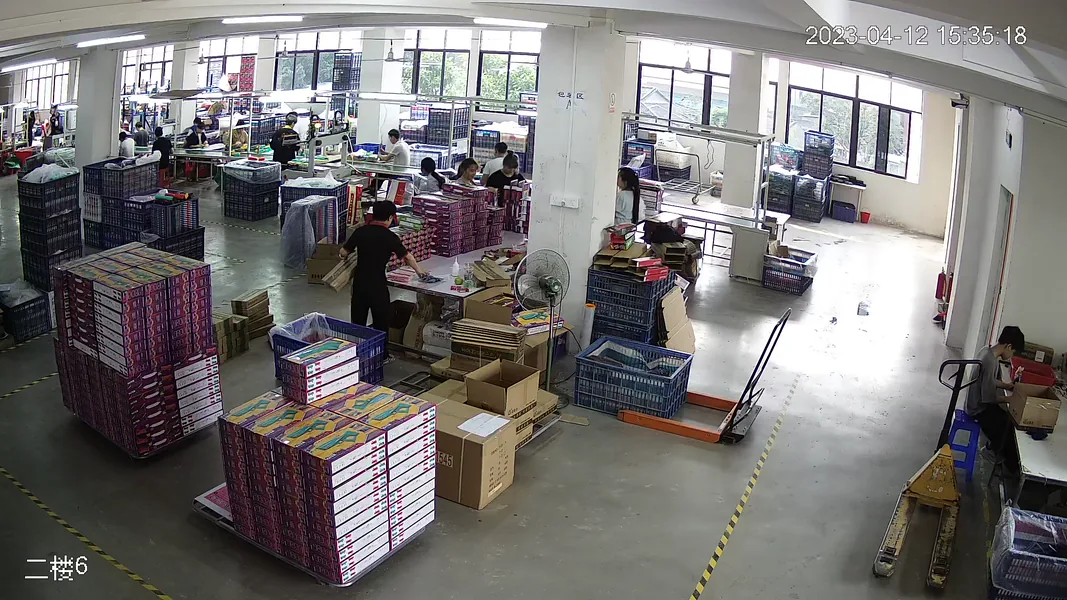
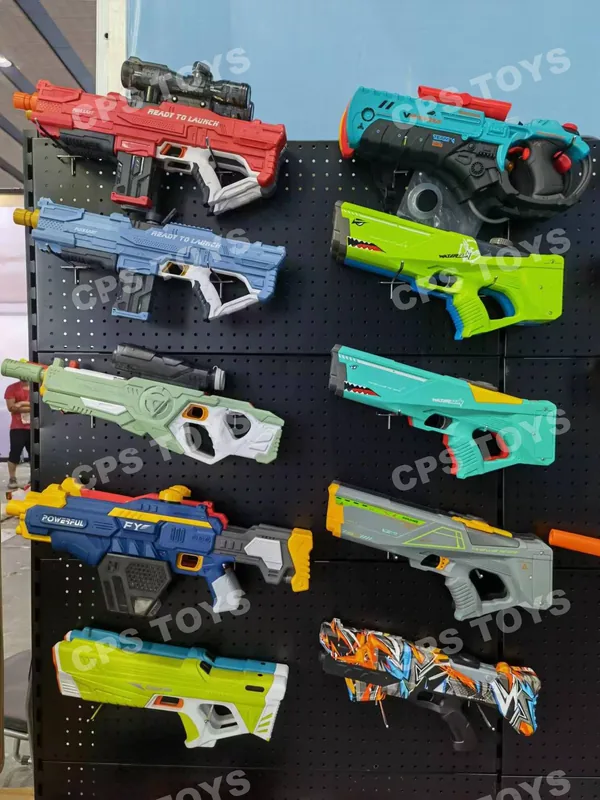
Key Takeaways
- STEM toys must contain a clear, task-based goal (build a circuit that lights an LED, program a sensor response) — not just a theme or label. Without a defined objective, it's a regular toy with a STEM sticker.
- Request the supplier's design brief or pedagogical rationale document. Legitimate educational manufacturers can articulate the learning outcome, required actions, and success criteria for each product.
- Third-party lab reports (EN71, ASTM F963) confirm physical safety but do not validate educational claims. Ask for documentation from curriculum advisors, teacher panels, or certification bodies like the German "Spiel Gut" seal for educational merit.
- Factory-direct pricing from China for complex STEM kits (motors, sensors, controllers) typically starts at a higher per-unit cost than simple plastic toys. Beware quotes that are too low — they often substitute generic components that fail durability tests.
- Prototype evaluation must include a "child logic" test: observe a child using the toy without instructions. If the learning goal isn't reached within 5–10 minutes of unguided play, the instructional design is weak.
Verification Methods Compared
| Method | What to Check |
|---|---|
| Red Flag | What to Avoid |
| Design Audit | Does the toy have a measurable task goal (e.g., launch a rocket X meters, complete a circuit)? |
| Red Flag | Vague claims like "encourages creativity" or "introduces science" with no defined action or measurable outcome. |
| Documentation Review | Request pedagogical rationale, teacher panel endorsements, or official educational certifications (Spiel Gut, STEM.org). |
| Red Flag | Supplier offers only a general CE/EN71 safety certificate and claims it proves educational value. |
| Prototype Testing | Run a "silent play test" — can a child complete the core task without adult instruction? |
| Red Flag | Toy requires heavy parental intervention to achieve the stated learning goal; instructions are the real product. |
| Component Inspection | Check sensor calibration, motor torque, and controller responsiveness against the spec sheet. |
| Red Flag | Generic "motor" or "sensor" with no brand, tolerance range, or data sheet; parts look identical to non-STEM toy components. |
Step 1: Define the Task Goal Before You Contact Suppliers
A legitimate STEM toy starts with a task objective, not a feature list. Before sending RFQs, write down exactly what the child must accomplish: "program a sequence of movements," "measure and record launch height under three air-pressure levels," or "construct a gear train that lifts 200g." This becomes your audit benchmark.
When you receive samples, ignore the packaging copy. Hand the toy to a child who hasn't seen it before. If they can't articulate what they're trying to achieve within a few minutes, the instructional design has failed. The toy relies on brand storytelling, not inherent task structure.
A well-designed physics kit demonstrates this principle clearly: the task is explicit — vary water volume and air pressure, record launch height, and explain the results using Newton's third law. The toy's value isn't the rocket itself; it's the embedded experiment cycle. Use this standard when evaluating any supplier's sample.
Step 2: Demand a Pedagogical Rationale Document
Every genuine STEM toy manufacturer can produce a design brief that explains the learning progression. This document should name the specific concept (not just "physics" but "elastic potential energy conversion"), the hands-on task that demonstrates it, and the success criteria a child can self-check.
If a supplier responds with only a catalog PDF and a price list, pause the order. Ask: "Who on your team designed the educational sequence? What teacher panel or curriculum advisor validated it?" Silence or deflection means the toy's STEM claim is a marketing decision made after the mold was cut.
For advanced kits with programming components, request the graphical programming interface walkthrough. A well-designed STEM coding toy lets a 7-year-old build a functional sequence without reading syntax. The interface itself teaches logic through visual blocks — this is a concrete thing you can test, not a vague promise.
Step 3: Separate Safety Certifications from Educational Certifications
A supplier will often show EN71, ASTM F963, or CE marks and imply the product is "certified STEM." These are safety standards — they confirm the plastic won't choke a child, not that the toy will teach one.
Educational certifications are separate and rarer. According to the German "Spiel Gut" seal criteria, evaluation requires assessment by educators and child development specialists. STEM.org accreditation reviews product design against learning science criteria. If a supplier has these, they'll lead with them. If they don't, no amount of safety paperwork fills the gap.
During factory audits, ask to see correspondence with curriculum advisors or pilot program results from schools. A manufacturer whose products have been placed in actual classrooms — for instance, physics kits adopted by hundreds of schools across Germany — will have documentation, feedback forms, and iteration history. This institutional track record is far more credible than a self-declared "STEM" logo.
Step 4: Inspect Component Quality, Not Just Assembly Quality
Standard QC (AQL sampling, drop tests, seam checks) catches assembly defects. STEM toys introduce a second failure mode: component-level performance drift. A motor that runs 15% below spec, a sensor with 200ms latency, or a controller with inconsistent Bluetooth range can make a programming task impossible while passing all cosmetic inspections.
Require the supplier to provide component datasheets for active parts: motor torque curves, sensor accuracy ranges, microcontroller specifications. Then test a random sample against those sheets. If the supplier can't produce datasheets, the components are likely commodity-grade parts bought on spot markets — fine for a basic RC car, unacceptable for a programmable robotics kit.
Check connector durability specifically. STEM kits endure repeated assembly and disassembly. Press-fit connectors that loosen after 20 cycles turn a reusable learning platform into single-use frustration. Ask for cycle-test data or specify a 100+ cycle minimum in your OEM contract.
Step 5: Run a "Silent Play Test" on Pre-Production Samples
The silent play test is the ultimate verification. Give the pre-production sample to a child in the target age range. Provide no instructions. Observe for 10 minutes. Three outcomes are possible:
Outcome A — the child discovers the core task independently and engages with it. This indicates strong intrinsic instructional design. Outcome B — the child plays with the toy but ignores the STEM task entirely. The toy has a learning feature bolted onto a conventional play pattern. Outcome C — the child becomes frustrated and abandons the product. The task design exceeds the age range or the interface is confusing.
Only Outcome A justifies a bulk order for educational purposes. Document this test on video for your own due diligence records. If the supplier is confident in their design, they'll welcome this evaluation. Resistance to independent play testing is itself a red flag.
How to Choose the Right Supplier for Verified STEM Toys
Choose a specialist educational toy manufacturer over a general plush or die-cast factory adding "STEM" to their catalog. Specialists employ instructional designers or partner with educators; their R&D process starts with learning outcomes, not hot market trends. Ask to see their product roadmap — does it show iterative refinement of educational mechanics, or just cosmetic reskins of existing toys?
For complex programmable kits, prioritize suppliers who manufacture their own electronic components or have long-term partnerships with specific sensor and motor vendors. Supply chain transparency on electronic parts correlates strongly with product reliability. A supplier who can name their microcontroller brand and firmware version is operating at a different tier than one sourcing generic boards.
MOQ expectations vary significantly. A simple task-based toy (like a water rocket with experiment manual) may start at 500–1,000 units. Programmable robotics kits with custom controllers typically require 1,000–3,000 units due to electronic component minimums. Smaller buyers should look for suppliers offering lower MOQs on established SKUs rather than custom OEM on complex electronics. Always negotiate based on the component BOM complexity, not just the final product category.
FAQ
What documentation proves a STEM toy is genuinely educational?
Three documents separate genuine STEM toys from labeled ones: a pedagogical rationale document naming the specific concept and task, curriculum alignment statements from qualified educators, and third-party educational certification such as the German "Spiel Gut" seal or STEM.org accreditation. Safety certificates (EN71, ASTM F963) confirm physical safety only — they do not validate educational claims.
Can a factory provide OEM STEM toys with custom learning objectives?
Yes, provided the factory employs in-house instructional designers or maintains partnerships with education consultants. During vetting, ask to review a past OEM project's design brief and the iteration history. A specialist STEM manufacturer can articulate how they translated a client's curriculum goal into specific product mechanics.
What are typical MOQs for custom STEM kits with electronics?
Programmable kits with custom controllers, sensors, and motors generally require 1,000–3,000 units due to component procurement minimums. Simpler task-based toys without custom electronics may start at 500 units. Always confirm per-component minimums, not just the final assembly MOQ.
How do I test if a STEM toy works for the claimed age range?
Conduct a silent play test: give the toy to a child in the target age range without instructions and observe for 10 minutes. If the child independently discovers and engages with the core learning task, the age-grading is appropriate. Frustration or disinterest signals a mismatch between the design and the claimed age range.
What red flags indicate a fake STEM label?
Five red flags: vague marketing language without a specific, measurable task goal; reliance on safety certifications to imply educational value; inability to produce a pedagogical rationale document; electronic components identical to those in non-STEM toys; and instructions that explain a concept rather than guide a hands-on task.
How much should I budget per unit for verifiable STEM toys versus standard toys?
Verified STEM toys with quality electronic components, instructional design investment, and educational certifications carry a higher per-unit cost than equivalent-feature standard toys. The premium reflects specialized R&D, component sourcing, and documentation. If a quote matches basic toy pricing, scrutinize the educational substance — genuine STEM design costs money to develop.
Request a Quote for Verified STEM Toys
At TopToyFactory, our STEM product line includes programmable robotics kits with genuine task-based learning and custom OEM educational toys developed with instructional design teams. We provide pedagogical rationale documents, component datasheets, and third-party educational certifications with every bulk inquiry. Contact our sourcing team to discuss your educational product requirements, request pre-production samples for silent play testing, or schedule a factory audit focused on STEM quality verification.