
A STEM label on the box doesn't make a toy educational. Most fail the only test that matters: they don't require a child to plan, test, and revise. This 2026 procurement you a repeatable framework for sourcing science, technology, engineering, and math toys that actually teach. You'll learn the four design principles that separate genuine task-oriented play from gimmicks, how to audit a supplier's product development process, and which specific questions to ask before you commit to an MOQ.
Key Takeaways
- Authentic STEM toys are defined by task orientation, not theme: A dinosaur kit isn't STEM unless the child engineers a moving joint or solves a paleontology simulation. Look for products where the play loop is plan → build → test → revise.
- Four design principles separate real STEM from pretend: Genuine STEM activities embed open-ended building, measurable variables, iterative logic challenges, and cause-and-effect mechanisms. If a toy has only one fixed outcome, it's a craft project.
- Vet the supplier's R&D process, not just the catalog: Ask to see the design brief and testing protocol for a specific SKU. Suppliers who co-develop with educators or run child-play-testing cycles produce far better outcomes than those who simply copy trending shapes.
- MOQs for custom STEM kits typically start at 1,000–3,000 units: Off-the-shelf OEM science kits can dip to 500 units, but fully customized curriculum-aligned kits with proprietary components usually carry higher minimums. Never accept an MOQ without first reviewing the activity's instructional design.
- The fastest way to eliminate bad suppliers is to request the teacher : If a manufacturer cannot provide a clear instructional framework, data recording sheets, or failure-mode analysis for their experiment kits, the product was designed by a factory engineer, not an educational designer.
Suppliers Compared
| Supplier / Channel | Specialization / MOQ / Price Posture / Educational Design Capability / Ships from |
|---|---|
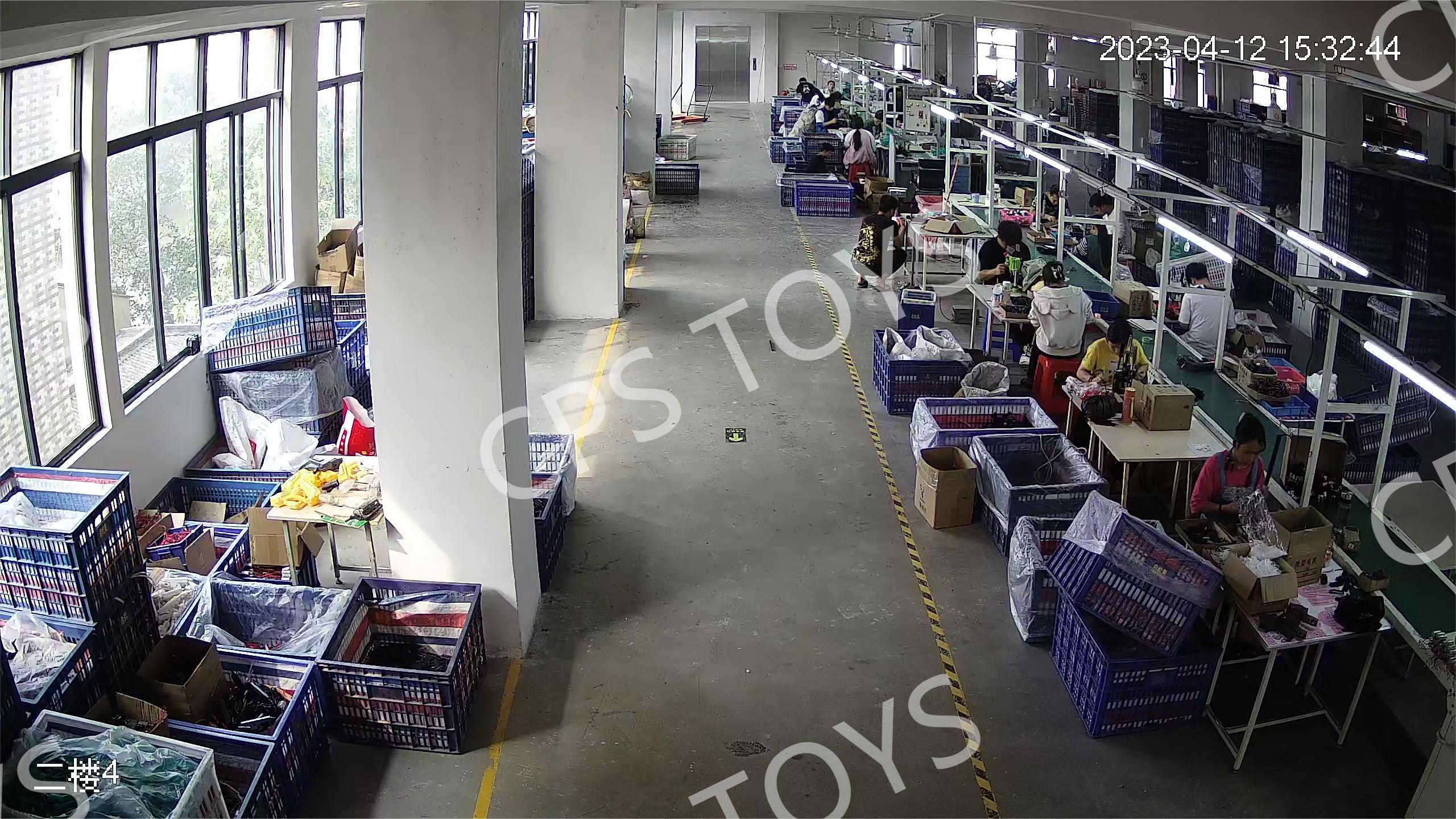
| Factory-Direct STEM Specialist | Physics, chemistry, robotics, astronomy core R&D / MOQ 500–3,000 for OEM kits; 120+ off-the-shelf science SKUs at lower MOQs / Factory pricing with custom R&D cost / In-house instructional design team; co-develops with educators / FOB Shantou or Shenzhen |
| Large Generalist Toy Factory | Broad catalog; STEM is a side category, not core R&D / MOQ 3,000+ per SKU / Aggressive on volume, thin on educational design / Rarely has dedicated instructional designers / FOB Ningbo or Yiwu |
| Shenzhen Electronics ODM | Coding robots, snap circuits, programmable kits with sensors and motors / MOQ 500–1,000 for existing molds; 3,000+ for new tooling / Mid-to-high; reflects component BOM / Strong on electronics engineering; weaker on pure science pedagogy / FOB Shenzhen |
| Yiwu Trading Company | Low-complexity “science” toys (volcano kits, crystal growing) / MOQ as low as 120–300 units / Lowest price point; high risk of false STEM claims / No original educational design; resells stock designs / EXW or FOB Yiwu |
| Curated B2B Educational Marketplace | Pre-vetted brands; often aligned with NGSS or Montessori / MOQ 6–24 units per SKU (wholesale packs) / Premium wholesale; 2–4× factory pricing / Pre-vetted by the platform for pedagogical standards / Domestic US/EU warehouse or dropship |
Supplier-by-Supplier
Factory-Direct STEM Specialist. When educational integrity is non-negotiable, a manufacturer that treats STEM as a core R&D division—not a marketing tag—is the strongest partner. Look for an in-house team that includes instructional designers, not just industrial engineers. These suppliers can walk you through a product's learning objectives, failure states, and the age-specific testing data behind each activity. Expect to co-develop packaging and manuals, and ask to see a sample of their teacher you place an order.
Large Generalist Toy Factory. These factories serve the promotional and mass-market tier. They'll quote you a fast price on a “STEM building block set” that is structurally identical to a standard block set with different packaging. If your channel is discount retail or carnival prizes, this works. If you're selling to school districts or subscription boxes that advertise educational outcomes, the return rate and reputational damage will erase any margin gain. Red flag: when you ask “what concept does this teach?” and the answer is “it teaches creativity.”
Shenzhen Electronics ODM. For coding, robotics, and programmable toys, Shenzhen ODMs own the supply chain. They can integrate motors, IR sensors, Bluetooth modules, and graphical programming interfaces quickly. The weakness is usually the curriculum layer—the factory will ship a robot that moves, but the 12-lesson coding progression that makes it a classroom tool often needs to be developed separately. Budget for a curriculum writer on your side, or partner with an ODM that has a documented co-development process with educators.
Yiwu Trading Company. The volume is tempting and the MOQ is friendly to small retailers, but this is where the label “STEM” gets stretched beyond recognition. A plastic microscope with 100× magnification that can't focus on a prepared slide, or a chemistry set whose biggest experiment is mixing baking soda and vinegar, will generate one-star reviews. If you source here, physically test every SKU against the four design principles below before listing it.
Curated B2B Educational Marketplace. For buyers who need small quantities of proven brands—perhaps to test a new product category or serve a boutique channel—curated platforms offer the lowest risk. You sacrifice margin but gain a supplier that has already performed the educational vetting. Use these marketplaces to benchmark what “good” looks like, then take those specs to a factory-direct partner for scaling.
The Four Design Principles That Expose Fake STEM Toys
Use these criteria as your personal audit checklist when evaluating a sample. If a supplier's product fails two or more, walk away.
1. Open-Ended Building with Constraints. A true engineering toy presents a goal (build a bridge that holds 500g) and provides materials, but not a single step-by-step path. Kits that only snap together one way train following instructions, not engineering. Ask the supplier: “Show me three structurally different solutions a child could build for the same challenge using only the parts in this box.”
2. Measurable Variables. Science requires data. A baking-soda volcano that just erupts is a demo, not an experiment. A genuine STEM kit lets the child change one variable (amount of vinegar, nozzle diameter, launch angle) and measure the result. Look for built-in measurement tools: a pressure gauge on a water rocket launcher, a protractor on a catapult, a timer integrated into a circuit challenge.
3. Iterative Logic Challenges. Math and logic toys must require the child to form a strategy, test it, hit a dead end, and revise. Single-solution puzzles or memory games don't qualify. The best logic toys—path-planning games, gear-train challenges, coding board games—have escalating difficulty that forces the child to abandon a naive strategy and construct a new one. Ask for the supplier's “failure-mode analysis”: what common wrong strategies did they observe in play-testing, and how did the design respond?
4. Cause-and-Effect Mechanisms. Technology isn't just screens. A mechanical gear set where turning one gear visibly changes the speed and direction of another, or a hydraulic arm where squeezing a syringe lifts a load, teaches systems thinking. If the mechanism is hidden inside a sealed plastic housing, the learning opportunity is sealed in with it. Favor transparent housings and exposed linkages.
A supplier who can speak fluently about these four principles—and whose product samples demonstrate them—is the real deal. Everyone else is selling plastic with a STEM sticker.
What to Ask Suppliers Before You Commit
Below is the RFQ checklist we recommend for STEM toy sourcing in 2026. Send these questions before you request pricing. A supplier's ability to answer them clearly—or their confusion—is itself the most valuable signal you'll get.
| What are the specific learning objectives for this SKU, and how were they validated? | Request the design brief, not the marketing copy. Look for statements like “children will measure and record reaction times under three different conditions” rather than “inspires curiosity.” |
|---|---|
| Can you provide the teacher guide, student data sheet, and a sample of the experiment log? | If these don't exist, the product was not designed for educational settings. A one-page instruction sheet is not a teacher guide. |
| What is the failure-mode analysis for the main activity? | The supplier should describe what happens when a child assembles a gear train backwards, uses too little pressure, or misaligns a sensor—and how the activity guides them to self-correct. |
| Which age group was this tested with, and can you share play-testing results? | Even informal observation notes are valuable. A supplier that has never watched a child use their product is designing in the dark. |
| What is the MOQ for a custom curriculum-aligned kit vs. an off-the-shelf OEM SKU? | Custom kits typically start at 1,000–3,000 units. Confirm whether MOQ applies per SKU or can be mixed across a themed series. |
| What safety certifications do the STEM kits carry, and are they valid for my target market? | For the US, expect ASTM F963 and CPSIA compliance. For the EU, EN71 and CE marking. Chemistry kits require additional toxicological assessments. |
FAQ
How do I quickly spot a fake STEM toy at a trade show?
Pick up the product and ask the booth rep: “What does the child measure?” If the answer is vague or the toy has no built-in measurement tool, it's a demo, not an experiment. Genuine STEM toys produce data a child can record and compare.
What is a reasonable MOQ for a custom educational kit from China?
For an off-the-shelf OEM science kit with custom packaging, expect 500–1,000 units. For a kit with proprietary components (custom molds, unique sensors, curriculum-aligned manuals), 1,000–3,000 units is standard. Always negotiate mixed-SKU MOQs within a themed series to reduce per-SKU risk.
Can a Chinese factory produce a STEM kit aligned to NGSS or UK National Curriculum standards?
Yes, but only if the factory has an in-house instructional design team or a proven co-development process with educators. Do not assume a factory that makes accurate plastic parts also understands pedagogical standards. Review their past curriculum-aligned projects and ask for teacher references.
Are coding robots without screens still considered STEM?
Absolutely. Physical coding robots that use tangible blocks, command cards, or button sequences teach computational thinking without screen time. The key is whether the child must debug a sequence—plan, execute, observe the robot's behavior, and revise the code. A robot that only drives via remote control is a toy, not a coding activity.
Request a Quote
If you're sourcing STEM kits that need to pass the four design principles above—not just the labeling test—TopToyFactory's in-house instructional design team can walk you through a product's learning architecture before you commit to tooling. Tell us your age group, subject focus, and target MOQ, and we'll send a sample that demonstrates genuine task-oriented play.