
Sourcing bulk toys for summer camps means solving a distribution problem before the order ships. Counselors need to hand sealed, labeled units to 50 kids in three minutes. Seasonal staff need outer cartons marked clearly enough to distribute without opening every box. This how to specify per-piece blister packs or polybags, mandate outer-carton markings that prevent chaos on distribution day, and balance those requirements against MOQ and margin pressures. You'll find a breakdown of wholesaler versus distributor roles, where to locate specialized suppliers, a step-by-step evaluation framework, a supplier checklist, and the red flags that turn a summer order into a fall write-off.
Wholesalers vs Distributors: Who Actually Solves the Packaging Problem?
A wholesaler buys bulk from manufacturers and resells to you. They may or may not touch the packaging. A distributor often holds exclusive regional rights and provides value-added services—relabeling, repacking, warehousing—that matter for camp orders. If you need per-piece blister packaging with your camp's logo and a barcode already in place, a pure wholesaler might pass the request to the factory and pocket a margin for doing nothing. A distributor or a factory-direct partner who offers OEM/ODM services can build that packaging into the production run, which is almost always cheaper and faster than post-production repacking.
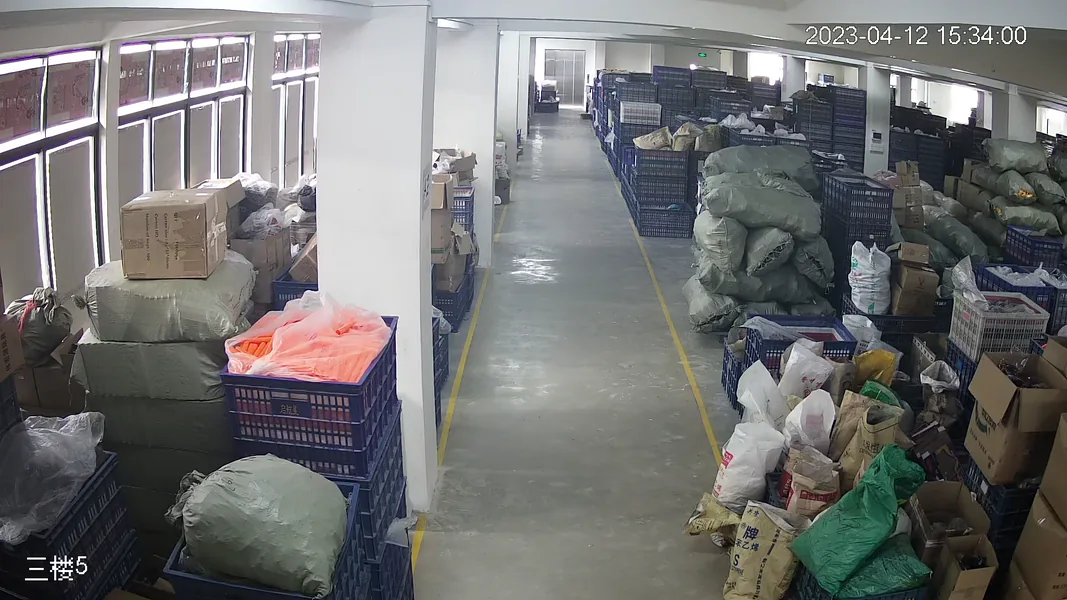
The Chenghai district in Shantou, China, shows why this distinction matters. Within its 345 square kilometers, over 10,000 toy enterprises cluster by specialization: mold-making and precision injection in Fengxiang, packaging and printing in Dongli, plush in Longdu. A sourcing agent or distributor who understands this geography can route your order to the right cluster, combining a toy factory in Lianxia with a packaging partner in Dongli without you managing two suppliers.
How to Find Suppliers Who Understand Camp-Grade Packaging
Start with B2B platforms like Alibaba and Global Sources, but filter aggressively. Search for 'summer camp toys bulk' or 'party favor toys wholesale' and immediately check gallery photos for blister cards, polybags with eurotabs, or clear retail-ready packs—not just loose bulk shots. A supplier who shows packaging in their product images already understands the distribution use case.
Trade shows remain the highest-signal channel. The Canton Fair (Guangzhou) and Hong Kong Toys & Games Fair let you inspect packaging material thickness, print quality, and carton labeling in person. You can test a blister pack's seal strength with your thumbs. Southeast Asian shows are also worth watching—suppliers in the region increasingly tailor packaging for institutional buyers like schools and camps.
Specialized sourcing agents in Chenghai are another underused channel. They can aggregate orders across multiple small factories—one for the squishies, one for the pop-its, one for the packaging—and deliver a consolidated shipment with uniform outer-carton labeling. This is particularly useful when your order spans 6–8 SKUs and no single factory can meet all your MOQ thresholds.
Finally, ask for referrals from other camp directors or group activity coordinators. A supplier who's already survived a summer camp season knows that boxes must be labeled by age group, activity type, and piece count—not just product name. That tribal knowledge is worth more than a 3% price break.
How to Evaluate Partners: Key Dimensions for Camp Orders
| Packaging capability | Can they produce per-piece blister packs, polybags, or retail-ready boxes in-house, or do they outsource? In-house is faster and avoids split responsibility when something goes wrong. |
|---|---|
| Outer-carton labeling | Will they print or affix external labels showing content description, age group, piece count, and destination (e.g., 'Cabin 4 – Ages 6–8')? This is non-negotiable for camp distribution. |
| MOQ flexibility | Factory-direct MOQs for custom packaging often start at 1,000–3,000 units per SKU. A distributor or agent may split MOQs across buyers, letting you order 500 units per SKU with custom packs. |
| Price posture | FOB China pricing should include packaging. Cross-check whether the quote is EXW (factory gate, no packaging labor) or FOB with finished goods. The difference can be 8–15%. |
| QC and pre-shipment inspection | Ask for QC photos of finished, packaged product before shipment—not just raw samples. Photos of blister-packed goods with pieces-per-carton data let you cross-check packing lists without a third-party inspection. |
| Authorized certifications | For US/EU camps, confirm EN71 (EU) or ASTM F963 (US) compliance. Ask for the actual certificate, not just a claim. Varies by product and factory. |
Build & Maintain the Relationship: Margin Protection and Red Flags
A supplier who delivers on time for summer camp season earns the right to your repeat business—but only if you structure the relationship to protect your margins. Start with a small trial order of 6–8 SKUs that tests the full packaging pipeline: per-piece blister or polybag, outer-carton labeling, and QC photo process. A trial order mixing soft SKUs (fruits, animals, stress balls) with clear blister packaging on an FOB quotation proves the supplier can handle SKU variety and packaging simultaneously.
Once the trial succeeds, negotiate a framework agreement for annual camp seasons. Lock in your packaging specifications for 12 months in exchange for a 5–10% price commitment. Suppliers value predictability—use it to your advantage. Never pay more than 30% deposit on a first order, and always tie the balance to a copy of the bill of lading. If a supplier demands 50% upfront and claims 'that's standard,' walk away.
Red flags that matter:
• Suppliers who quote without asking about your age-group distribution — they don't understand labeling requirements.
• Packaging samples that arrive without barcodes or age warnings — they're cutting corners.
• Any hesitation when you ask for a photo of the actual outer carton before it leaves the factory.
A camp session doesn't wait for a late shipment.
Supplier Evaluation Checklist
Use this checklist when comparing suppliers for camp-season bulk orders. Each item addresses a failure point that has ruined a camp's opening day.
| Packaging type offered | Blister pack, polybag, retail box, or loose bulk. Confirm per-piece packaging is included in the unit price. |
|---|---|
| Outer carton labeling | Supplier can print or affix: content description, age group, piece count, camp location/cabin number. Request a labeling template or sample photo. |
| MOQ per SKU (with custom packaging) | Factory-direct typically 1,000–3,000 units; agents may split to 300–500 units. Confirm whether MOQ applies per SKU or per order. |
| Price basis | EXW vs FOB vs CIF. FOB should include finished, packaged goods loaded at port. Get a written breakdown. |
| Lead time (production + packaging + transit) | Varies by spec, season, and port. Ask for a Gantt-style timeline: production → packaging → QC → shipping → estimated arrival. |
| QC photo policy | Confirm they will send photos of actual packaged goods and outer cartons before shipment, not just pre-production samples. |
| Certifications | Request copies of EN71 or ASTM F963 certificates. Verify they cover the actual SKUs in your order, not just the factory. |
| Deposit and payment terms | Standard is 30% deposit, 70% against bill of lading copy. Reject 50%+ upfront demands on first orders. |
| Communication responsiveness | Do they ask clarifying questions about age groups, distribution, and labeling? Or just push a generic quote? The former is a strong signal. |
FAQ
What packaging type works best for summer camp distribution?
Per-piece blister packs or individually sealed polybags. Counselors hand out one sealed unit per child without counting, sorting, or repacking loose bulk items on-site.
How do I specify outer-carton labeling for camp orders?
Provide a labeling template that includes: product name, age range, piece count per carton, and a destination field (e.g., 'Cabin 3 – Ages 5–7'). Require the supplier to send a photo of the labeled carton before shipment.
What's a realistic MOQ for custom-packaged camp toys?
Factory-direct MOQs typically range from 1,000 to 3,000 units per SKU with custom blister or polybag packaging. An agent or distributor may lower that to 300–500 units by consolidating orders.
Should I buy EXW or FOB for camp-season bulk orders?
FOB is safer. The supplier is responsible for getting finished, packaged goods to the port. EXW leaves packaging completion unverified until your forwarder picks it up, which is risky on a camp deadline.
How early should I place a camp-season toy order?
Allow 45–60 days for production plus 25–35 days for ocean freight to the US (port-dependent). For a June camp season, place orders by late February or early March. Rush orders in April–May will cost 20–30% more in air freight.
What certifications do camp toys need for the US and EU?
ASTM F963 and CPSIA for the US; EN71 and CE marking for the EU. Always request current certificates that list the specific SKUs in your order, not just a generic factory certification.
Request a Quote for Your Camp-Season Order
If you need a sourcing partner who can handle per-piece packaging, outer-carton labeling, and competitive MOQs in one production run, TopToyFactory works with buyers to specify the exact packaging and labeling your camp distribution requires—then delivers QC photos of the finished goods before they ship. Send your SKU list and packaging requirements for a detailed FOB quotation.